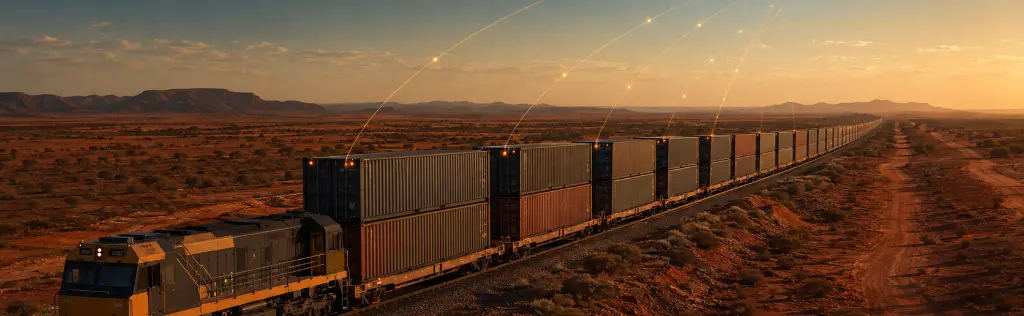
Intermodal freight train travelling through a remote Australian transport corridor
Intermodal Asset Tracker · Two connectivity models

Every asset.
Every mode.
Every move.

Low-power visibility for rail cars, shipping containers, trailers, chassis, tank containers and mobile equipment across road, rail, port, depot and remote transport environments.

Compare the two models ↓
Choose the right network

Satellite or LoRaWAN.

One tracking platform, offered in two deployment configurations. Choose satellite connectivity for remote transport corridors, or LoRaWAN for ports, container yards, freight terminals, depots and private networks with compatible gateway coverage.

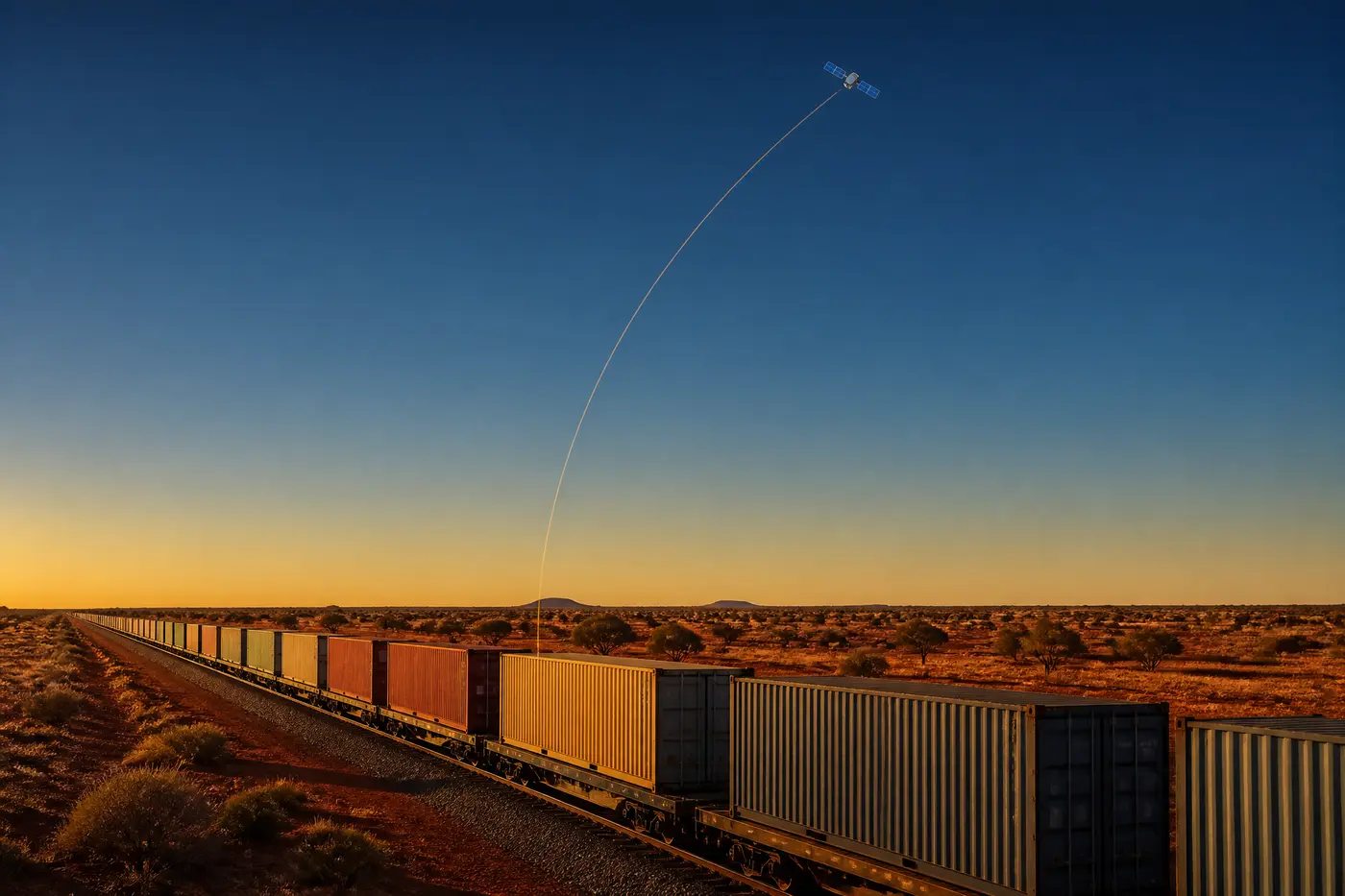
Intermodal freight train connected through emerging satellite coverage
MODEL 01 · SATELLITE

Satellite coverage

Designed for rail corridors, highways and remote operating areas where reliable terrestrial communications may not be available.

  • Remote and long-distance transport routes
  • GNSS location and movement reporting
  • No local gateway required
  • Designed for emerging 3GPP NTN and Direct-to-Cell services

Container terminal assets communicating through compatible LoRaWAN gateways
MODEL 02 · LORAWAN

LoRaWAN coverage

Connect large numbers of nearby assets through compatible gateways across controlled logistics sites and private networks.

  • Ports, terminals, yards and depots
  • Efficient one-to-many local coverage
  • Low-power monitoring at asset scale
  • Private-network deployment flexibility
DeploymentSatelliteLoRaWAN
Local infrastructureNo local gateway requiredCompatible LoRaWAN gateway
Primary coverageRemote and long-distance corridorsPort, terminal, yard or private network
Best fitRail routes, highways and isolated operationsDense asset populations at controlled sites
PlatformSAVPSAVP
Availability note: Satellite connectivity depends on operator availability, regional coverage, device certification and commercial service support. Direct-to-Cell is an emerging capability and is not universally available. LoRaWAN operation requires compatible gateway and network coverage.
The intermodal journey

Every leg. Every dwell. Every event.

Track reported location, movement, dwell time and exceptions as assets move through depots, roads, rail and maritime transport, terminals and yards. Route history and operational alerts are presented through the StiknTrak Asset Visualisation Platform.

Discuss your deployment →
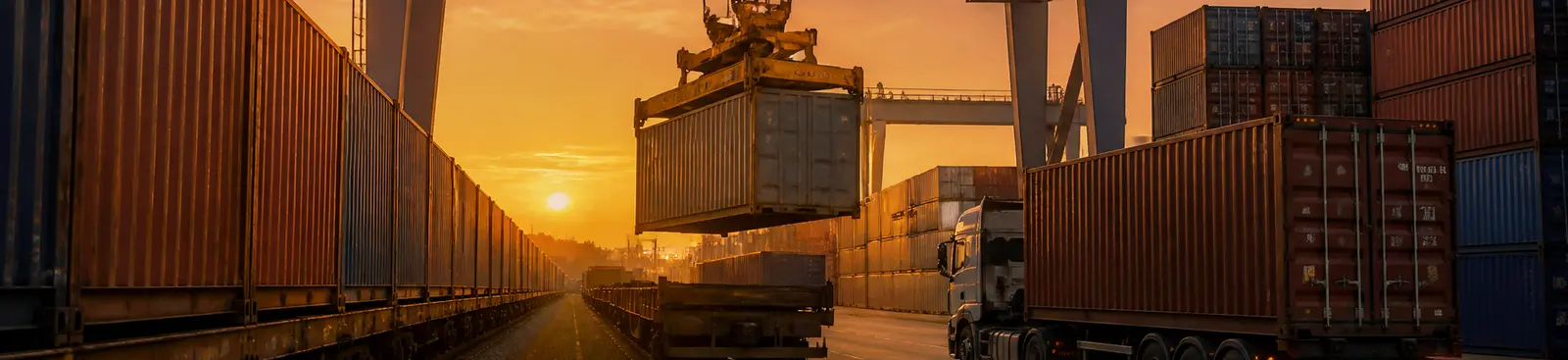
Shipping containers moving through an intermodal terminal
Operational visibility

Know where assets are—and how they are being used.

Location & movementScheduled GNSS location and movement visibility across the asset journey.
Dwell timeTime spent at yards, depots and terminals, recorded by asset and journey leg.
Geofence eventsArrival and departure alerts at configured operational boundaries.
Unauthorised movementFlags unexpected movement of assets that should remain stationary.
Route historyReported movement, dwell and event history across the journey.
Asset utilisationUnderstand how equipment is routed, cycled and used over time.
Idle & misplacedSurface delayed, idle or misplaced equipment across the network.
Priority alertsException-based operational alerts presented through SAVP.
Built for intermodal duty

Compact. Rugged. Solar-assisted.

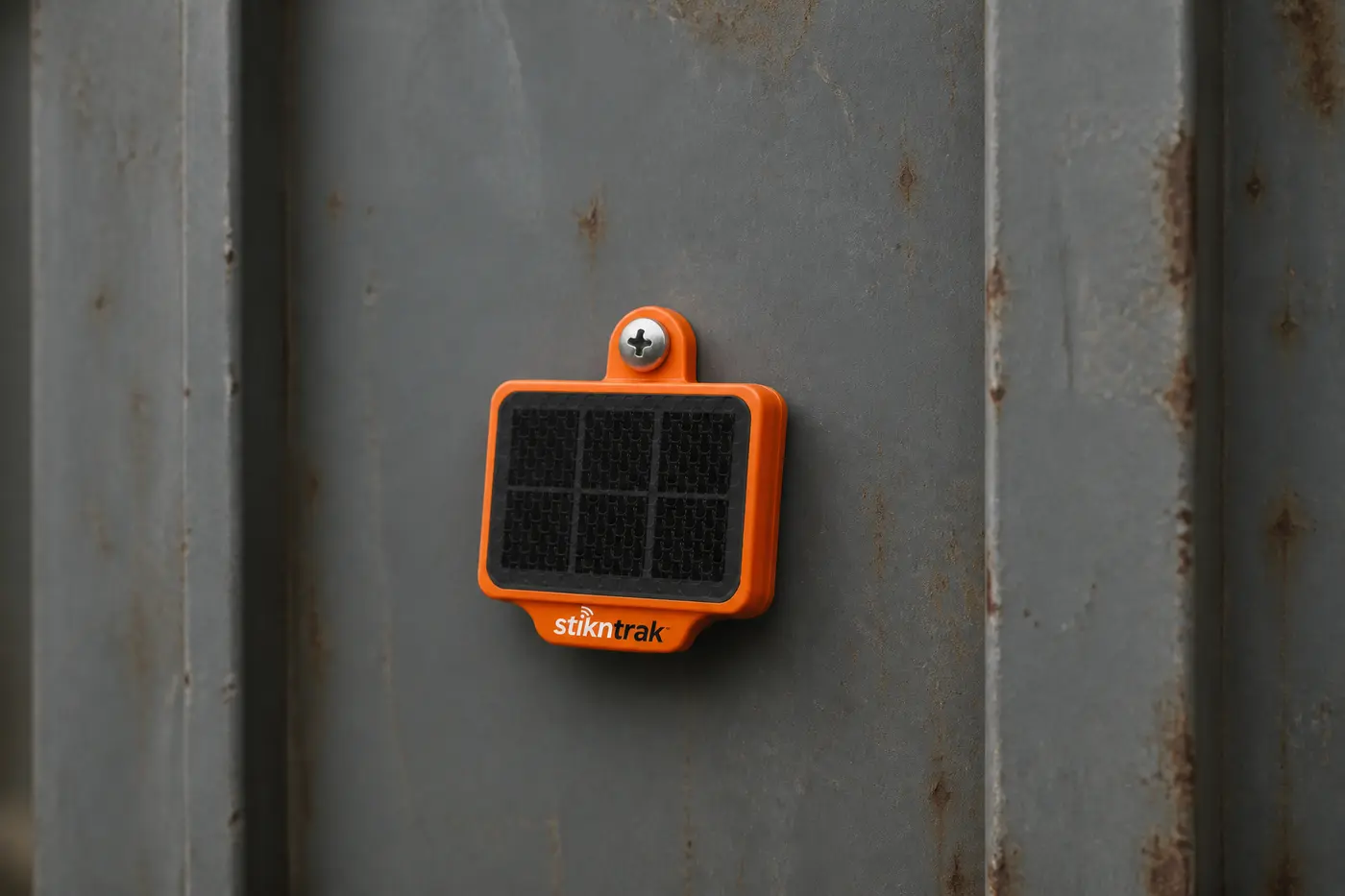
A low-power IP67 tracker with flexible screw, zip-tie or industrial-adhesive mounting for rail cars, containers, trailers, chassis, tank containers and mobile equipment.

60 × 44 × 15 mmCompact enclosure
32 gLightweight device
IP67Dust and water protection
Solar-assistedReduced battery servicing
GNSSLocation and movement data
−10 to +65°COperating temperature
3-axis motionMovement and inactivity events
SAVPOne fleet operating view
Compact orange StiknTrak Intermodal Asset Tracker mounted on a container