Technology

Ambient IoT.
A new physics for asset visibility.

Conventional IoT runs on batteries, SIM cards, gateways and wires. Ambient IoT rewrites the rules — energy harvested when possible, communications opportunistic, costs low enough to deploy on every individual unit, not just every pallet.

Four principles

What makes a device "Ambient IoT".

① Low power

Sleep deep, wake briefly

Microcontrollers spend 99%+ of their life asleep, drawing single-digit microamps. Sensing is event-driven; transmission bursts last milliseconds; broadcast intervals are configurable from 100 ms to 12 hours.

② Low cost

Per-unit economics, not per-pallet

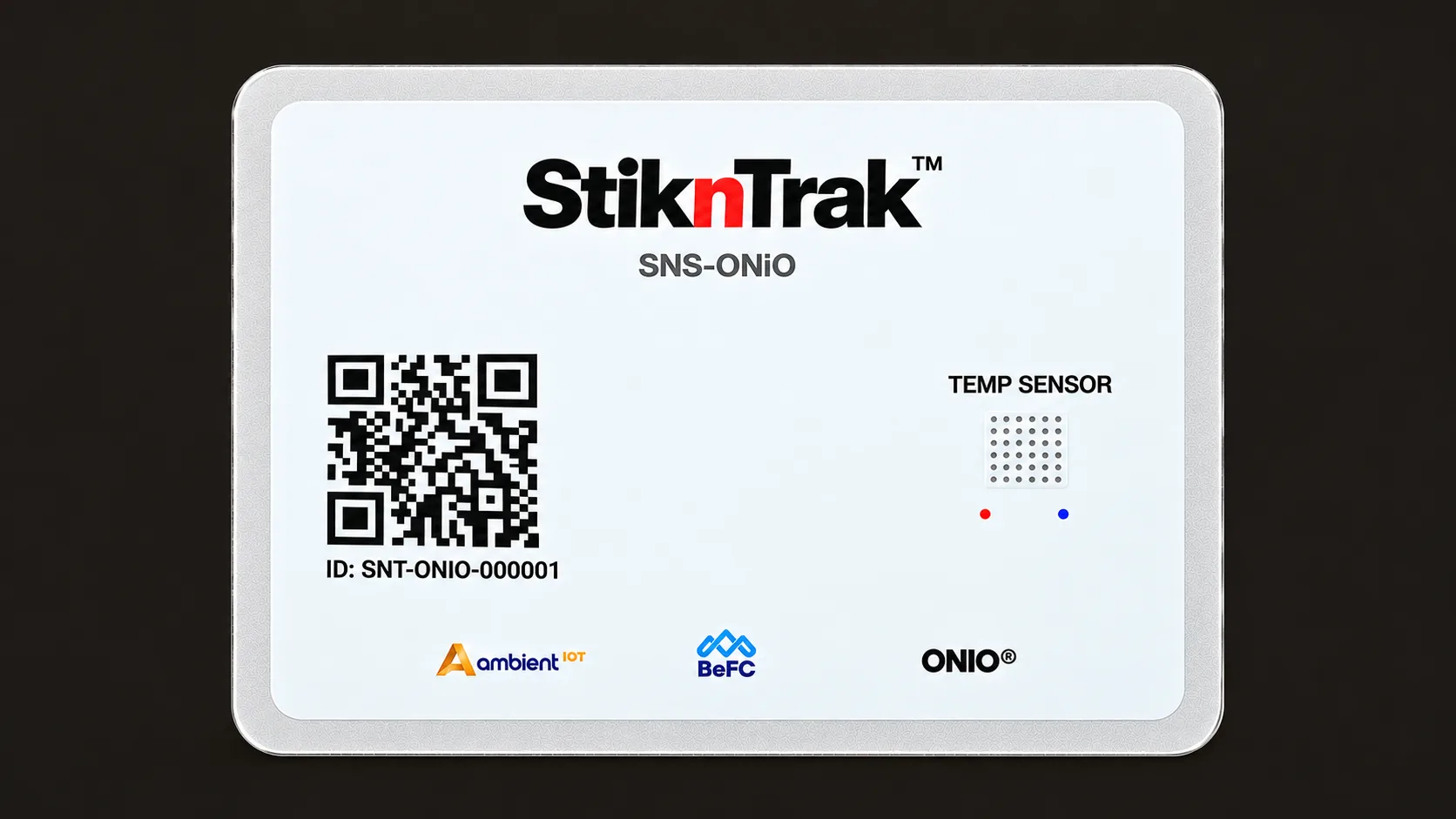
StiknTrak SNT-UF101 targets sub-dollar disposable economics — a paper-thin tag with a zinc-coated battery. The SNS-S05T disposable temperature logger rides inside cold-chain shipments and stores 60,000 on-board readings. Cost-per-device is engineered to disappear into the unit price.

③ Battery-free where possible

Energy harvested, not stored

Where physics allow we harvest energy from the environment — RF, light, motion, thermal gradients. Where a battery is needed, we use the smallest, cheapest, longest-lived chemistry the application can tolerate.

④ Opportunistic communications

Any phone, vehicle or gateway becomes a relay

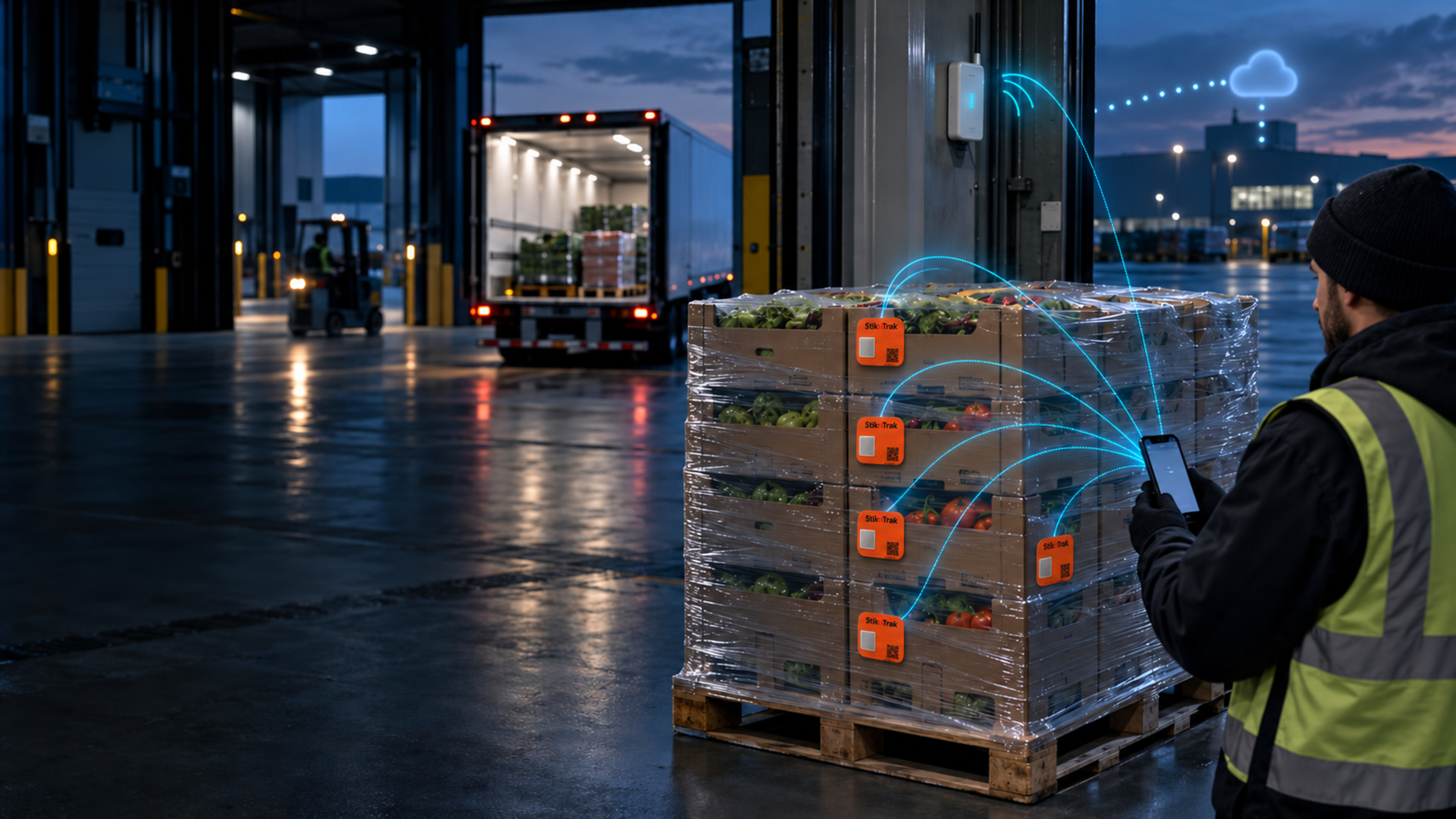
Rather than building dedicated networks, devices broadcast on standard BLE 5. Workers' phones, fleet vehicles and forklifts already in the environment become free, ambient gateways that ferry data to SAVP.

SAVP

One platform for every device.

Every StiknTrak device — across all three families — feeds the StiknTrak Asset Visualisation Platform (SAVP). SAVP is the cloud system of record for location, condition, and chain-of-custody data.

IngestBLE / NB-IoT / LTE-M
device telemetry & sensors
ProcessGeofences, alerts, ML
thresholds, excursions, idle detection
VisualiseMaps, dashboards, reports
real-time, historical, audit-grade

Real-time location

Asset positions on map, live as opportunistic relays update. Indoor, outdoor, in-transit.

Telemetry & alerts

Temperature, humidity, oxygen, motion. Email, SMS, LED notifications for any deviation.

Audit & compliance

Excel reports, 21 CFR Part 11, GxP and ISO chain-of-custody logs at the unit level.

Microchip and PCB macro photograph — silicon at scale
+ Silicon   BLE 5.4 · LTE Cat-M1/NB-IoT · LoRaWAN · GNSS · sensor MCU
Connectivity options

Pick the radio for the deployment.

BLE 5.0 / 5.3

Short-range, ultra-low-power

Up to 350 m line-of-sight. Relayed by phones, gateways, sister devices. Standard radio in every StiknTrak and StiknSense product.

NB-IoT / LTE-M

Cellular, no Wi-Fi required

SNT-L3G beacon/gateway connects directly to the cloud via NB-IoT or LTE-M (Cat-M1) — for sites where no BLE relay infrastructure exists.

GNSS

GPS / GLONASS / BeiDou

Optional positioning on SNT-L3G — outdoor accuracy ~30 m. Used where opportunistic BLE coverage is sparse.

Satellite

Kinéis — global, off-grid

Hybrid Kinéis satellite + BLE smart-label, co-developed with Linxens IoT Solutions. Near-real-time global coverage, GNSS positioning, solar-powered with 8–10 year autonomy — for containers, freight wagons and trailers beyond cellular reach.

Sensing

What our devices can measure.

Temperature

±0.2 °C accuracy across cold-chain ranges. Logging at 1–60 minute intervals.

Humidity

±0.5–2 % RH. Detects packaging breaches and moisture excursions.

Location

BLE proximity, opportunistic relay, optional GNSS (GPS / GLONASS / BeiDou) and Kinéis satellite for global coverage.

Motion / shock

3-axis accelerometer for activity, idle status, drop and shock-event detection.

Same platform. Three device families.

See product line